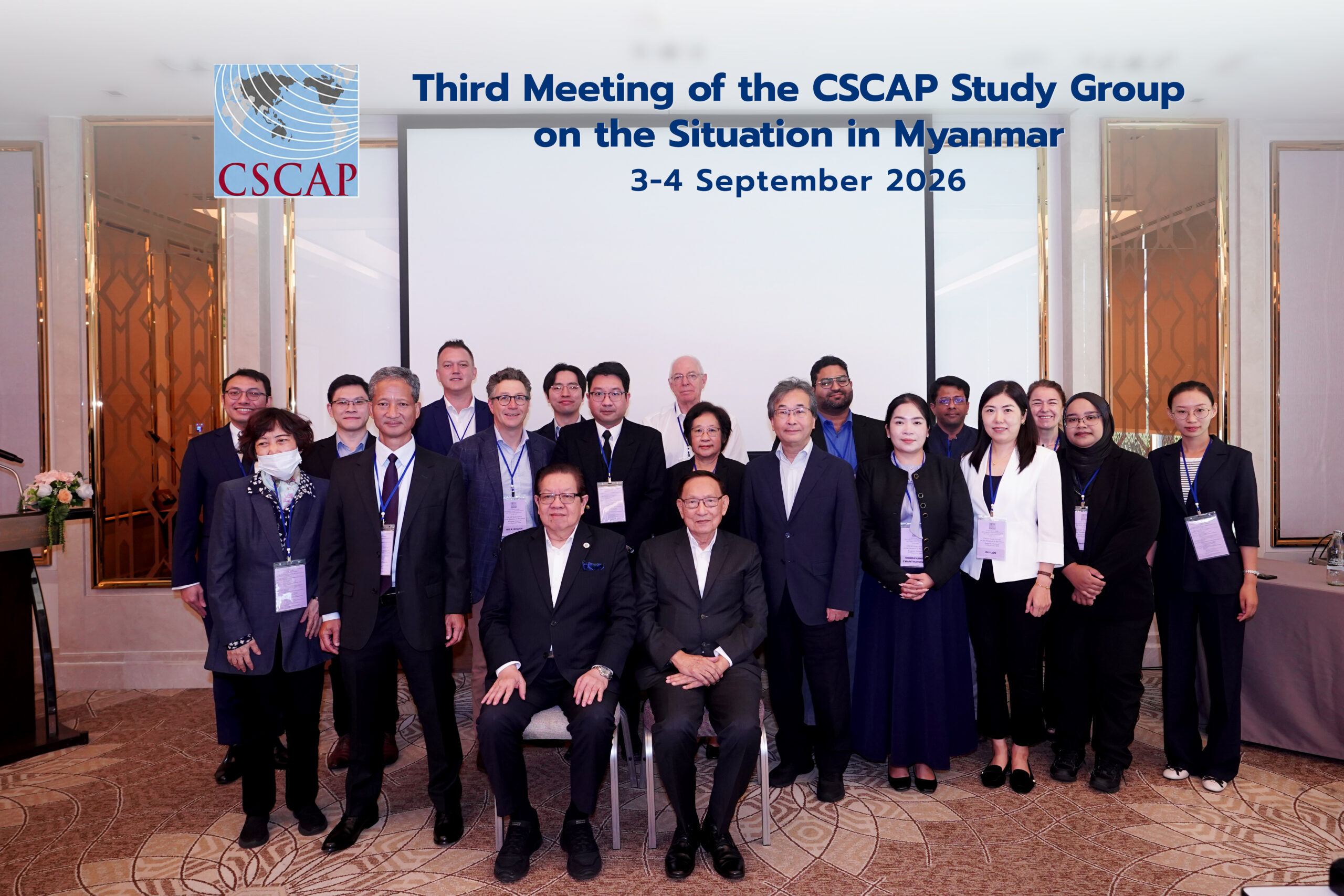
3rd Meeting of the CSCAP Study Group on the Situation in Myanmar
The third meeting of the CSCAP Study Group on the Situation in Myanmar brought regional experts and CSCAP representatives together in Bangkok on 3–4 September 2026 to examine possible pathways towards a sustainable political resolution to the ongoing crisis.
Discussions centred on Myanmar’s future political architecture, including the future role of the Tatmadaw, relations between the Union Government and Ethnic Armed Organizations, possible federal or federal-inspired governance arrangements, power-sharing, national reconciliation, and prospects for political transition. The meeting focused on identifying areas of convergence that could underpin practical policy recommendations rather than revisiting competing political narratives.
A second major theme was ASEAN’s role in supporting a political resolution. Participants considered the future of the Five-Point Consensus, ASEAN’s comparative advantages and institutional constraints, and realistic diplomatic initiatives that the organisation could pursue as circumstances in Myanmar evolve.
The meeting also examined the wider regional and international strategic environment, considering how China, India, Japan, Russia, the United States and other external stakeholders may influence Myanmar’s political trajectory. Particular attention was given to opportunities for constructive international engagement while preserving ASEAN centrality.
The final session focused on translating these discussions into practical policy recommendations, including identifying areas of broad consensus and considering recommendations for ASEAN and other relevant stakeholders, as well as the possible development of a CSCAP Memorandum.
The meeting provided an important opportunity for regional experts to bring together political, diplomatic and strategic perspectives on Myanmar. By focusing on areas of potential convergence and practical policy options, the Study Group aimed to contribute constructively to regional efforts towards a more sustainable political resolution.